Dji Mavic Pro - a compact drone for everyone that has been long awaited

When the Dji Mavic Pro came onto the market, many people's first reaction was - wow, how small, this is exactly the kind of drone I've been waiting for! And that's just what it is - small, the size of a pack of breadsticks when folded, fitting into a parka pocket, but as good a drone and camera as those ubiquitous "white Phantoms" - RAW images, 4K video, 3 km range, speeds up to 65km/h, collision sensors, etc. I put my Phantom 3 up for sale at Drooniklubi that evening, right after the Mavic presentation, and ordered a Mavic from Photopoint the next morning. And I don't regret it for a moment!

The Mavic fits into the large pocket of my winter jacket when folded. (Image: Dji)
Where we come from
The way the market leader Dji in particular has developed its products, releasing new products and models every few months, is absolutely amazing. Almost every model brings innovation and pleasant surprises. We are at a very exciting stage today, with drones developing rapidly, just as smartphones once did.
When I first got my DJI Phantom 2 Vision+ and later Phantom 3 Pro drones, I liked the thought that they weren't very big. I basically realised that I couldn't see myself lugging a big bulky drone around in the long term. You know, the sort that the hard-core guys built back then, mostly before "out-of-the-box drones". Then I got the larger Inspire 1 and, today, Inspire 2 professional drones. They can still be carried by hand, but they are pretty bulky. You wouldn't readily take one on a trip.

The Mavic is several times smaller than my work drone, the Inspire 2
I've also travelled quite a lot with the Phantoms - in Thailand, Croatia, Greece, etc. - and they have always been in my hand luggage or on a scooter in a special backpack. A proper, fully packed backpack about the size of a schoolbag. I always had to bring an extra bag for it.

I often carry the Mavic in the same bag as the gear for the big drone. Find the drone in the picture!
But with the Mavic you don't have to. Seriously, this thing is exceptionally, almost absurdly small for what it can do. Not only is the drone itself small, but so is the controller. It's about the size of a video game controller, and you can attach your smartphone to it as a screen, running the very good and versatile Dji GO app.
This could be the ideal "flying compact camera" for the average user who wants to make memorable moments in their life more interesting, but I wouldn’t rule out using it for work in good lighting conditions either. A few experiments have already successfully proved that to me.
The Mavic as an aircraft
I made the first flights with a little scepticism - the thing is so small and light, how can it even stay in the air, and won't a breeze carry it away on the very first day? But as soon as I started the thing up and lifted it into the air, the corners of my mouth turned up and have stayed there ever since. I'd highlight 5 aspects.
First of all, it is considerably quieter than a Phantom or Inspire, which makes it much more convenient to use at weddings or in similar circumstances - the noise level is no longer comparable to a lawnmower. It's also nice for taking pictures in a bog, for example, as it doesn't disturb those who came to enjoy the peace of nature as much.
The second thing that immediately caught my attention was the exceptional stability. Beginners should of course make sure the device finds at least 8+ satellites, because otherwise an average drone will simply “go back to China” if you don't know how to control it manually. But the way a piece of high-tech equipment hangs in front of you as if glued to the air is simply phenomenal. It wobbles a little in stronger winds (only the drone, not the picture), but is still stable. My Inspire drifts around considerably more.
Third, there are the flight characteristics. It is a real pleasure to fly and responds very precisely to the control sticks. It also comes with more automated flight modes. One of my favorites is "Tripod mode", which makes the drone very slow. No matter how much you move the sticks, it travels at a slow walking pace at most. I tried flying slowly through low tree canopies - successfully.
World-famous filmmaker Philip Bloom’s video of a flight in tripod mode
Since it can also hover by filming ground patterns at heights of up to about 5m, it can hold its position well at low altitudes even if it loses the GPS signal, including indoors. Indoors you must be especially careful around any living things; for this, it's good to use special propeller guards or even propeller cages, which they also have.
At the other extreme - in sport mode it reaches a speed of no less than 65km/h, so it's quick as hell. This brings us to a safety feature - it has collision sensors at the front that detect reasonably visible obstacles and stop the drone. Remember, though, that there are no such sensors on the sides, rear or top, and they are also switched off when sport mode is in use.

Propeller guards and special, extra-foolproof protective nets (Photo: Dji)
It has a whole range of automated flight features; for example, it can follow you on its own, and it's worth looking at them in this video, for example. Be extra careful.
Fourth, I would highlight the range. The signal is good; I tested it in a field up to 3km, and the video came through as an HD feed. Incredible, this controller is really tiny. Thanks to this, in cold weather I can sit in a warm car, sip tea and calmly get on with my work, because the signal travels so well. I would even say it's safer in the car, especially if you position the window towards the drone and can see it - you have better visibility of the screen in the shade, you stay in one place, no one comes over to chat, your fingers don't go stiff, etc.
Fifth, the battery life supports all of the above. Although the battery is small, the device is also light and the machine flies for around 25 minutes. That is quite enough for a proper session.
Mavic as a camera
The Mavic's camera is very small, and you might wonder what kind of rubbish it could possibly produce. But the sensor is the same size as those on the Phantoms, and this little stabilizer, or gimbal, is perfectly capable - the video is silky smooth, and photos don't come out shaky.
The glass is sharp as hell, I don't know how they managed it. The camera produces 12 megapixels, but it's essentially sharp from edge to edge. On the Phantom 3, for example, the corners were completely soft. Adobe products now also support the Mavic lens. The Mavic produces nice DNG RAW files, and of course jpg too.
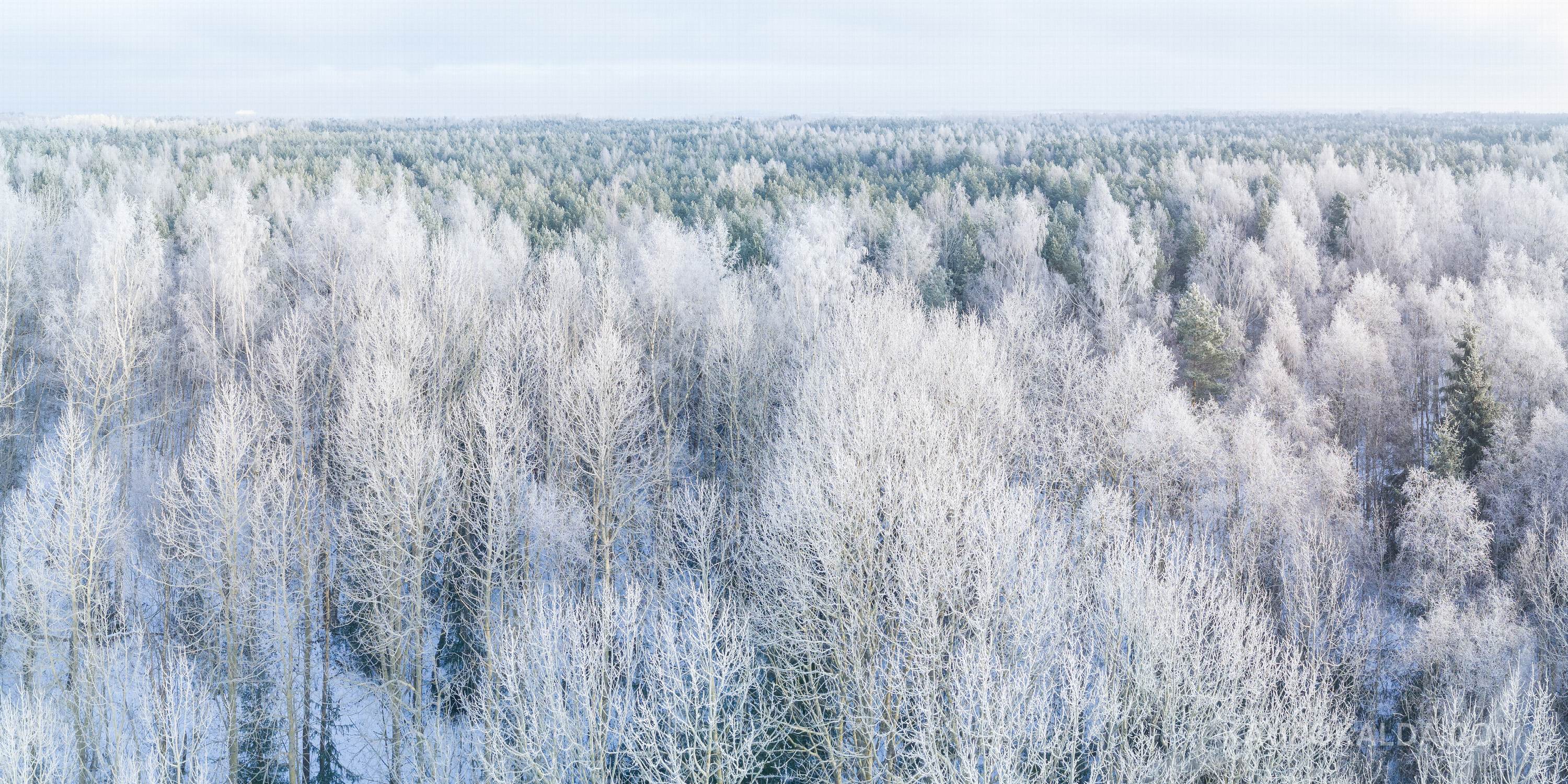
The Mavic’s lens is so sharp that every fine detail is clearly defined.

A section of a panorama
But to get a sharp image, there's one difference from the Phantoms – to focus, you have to tap the relevant spot on the screen or use the corresponding button on the controller. It now also has autofocus, which searches for focus in the centre of the frame every so often, but that may not always be good for video. I focus with my finger on the relevant spot on the screen, but I've also assigned the right-hand C2 button underneath the controller to focus on the centre of the screen.Anyway, things are very good in terms of sharpness.
Of course, when the city gets darker, blue hour arrives and the city lights come on, the gap between this camera and, for example, the Inspire X5S camera with its 8x larger sensor quickly widens, but it is perfectly usable up to a point. This is inevitable given the sensor size, but there is progress here too compared with older drones.
Still, it can surprise you too, just look at this shot from Helsinki. A beautiful moment that this camera captured fittingly.
A beautiful evening in Helsinki, a panorama of 4 frames.
One more cool feature - the Mavic is probably the only off-the-shelf drone that allows vertical photography, or portrait mode. It actually turns the camera 90 degrees and lets you shoot vertically like a pro.

The Mavic has the rare ability to take portrait-orientation shots too.
I’m not much of a video person myself, at least not yet, but I’ve made a few test clips and the image is beautifully silky. You can also turn on “Cinema mode” in the automatic programme, which makes movements especially smooth. The 4K footage itself is as smooth as a National Geographic video. Of course, you need to know certain things and use neutral-density filters when necessary to slow the shutter speed, but that applies to any drone. I recommend turning down the sharpening a little (-1), because at the default 0 setting the image is actually oversharpened.
Someone's cool video from Thailand
One little quirk too
So that my story doesn't seem almost unbelievable fanboy as a song of praise (I am a fan, of course), there is one small thing that bothers me a little, though it can generally be corrected. Namely, its color balance is sometimes a little off. Of course, I haven't yet had a chance to try this device in summer, but winter shots come out of the camera slightly greenish. This can be fixed quickly in post-processing, but it's a quirk it has when using automatic white balance. For video, it would probably make sense to use manual white balance. Hopefully, a future firmware update will improve this.
Summary and who the Mavic is suitable for
The Mavic is a compact drone with very good value for money, my little favorite. I would recommend it to anyone who thinks they would like a convenient flying camera too. Tiny and portable, it’s a capable flying machine with a surprisingly good camera for something so small. I use it both for fun and sometimes for work, including in places where I wouldn’t dare fly a big clunker. Of course, every good picture also needs careful post-processing, and it is no different from other cameras in that respect.
I recommend getting the combo, which comes with useful things - 3 batteries (about an hour of flight time in total), a battery charging hub, a car charger, a bag, etc. For example Photopoint's.

(Image: Dji)
It's suitable for a hobbyist, for a wedding photographer looking to add a little extra touch, and for a traveller or hiker. For someone like me too, who takes drone photos for work and as a hobby (because it's so cool!). I also use it when I simply have it with me in the car at the right moment. The best camera is the one you have with you.
My next article about the Mavic will probably come from a spring sailing trip to Greece, as we travel among the islands from Athens to Santorini. I can’t wait to capture wonderful memories with this miracle insect and share them with readers.
Finally, here’s a video by Casey Neistat, one of the world’s most famous YouTube stars, about how he got his Mavic. I don’t think I’ve ever seen him so excited about anything. Admittedly, he did the tests without focusing, so they went a little wrong, but that’s not the main point of this clip.
--