Drone panic: a guide - what should you actually do if a drone seems suspicious?
The context for this article: Estonia is at peace. A kind of drone panic has now broken out, which was also discussed in thisin the article for the Defence Forces. The fact that a military drone strayed here is of course very sad and worrying, but it has NOTHING to do with the subject when we talk about store-bought drones in Estonia. It is a shame, of course, that some "public figures" are trying to use this eastern rhetoric domestically and frighten people for no reason.
First of all, let's distinguish between different types of drones
All unmanned aerial vehicles are called drones, so aircraft-like vehicles, bomb carriers, ordinary camera drones, toys and the like are all drones.
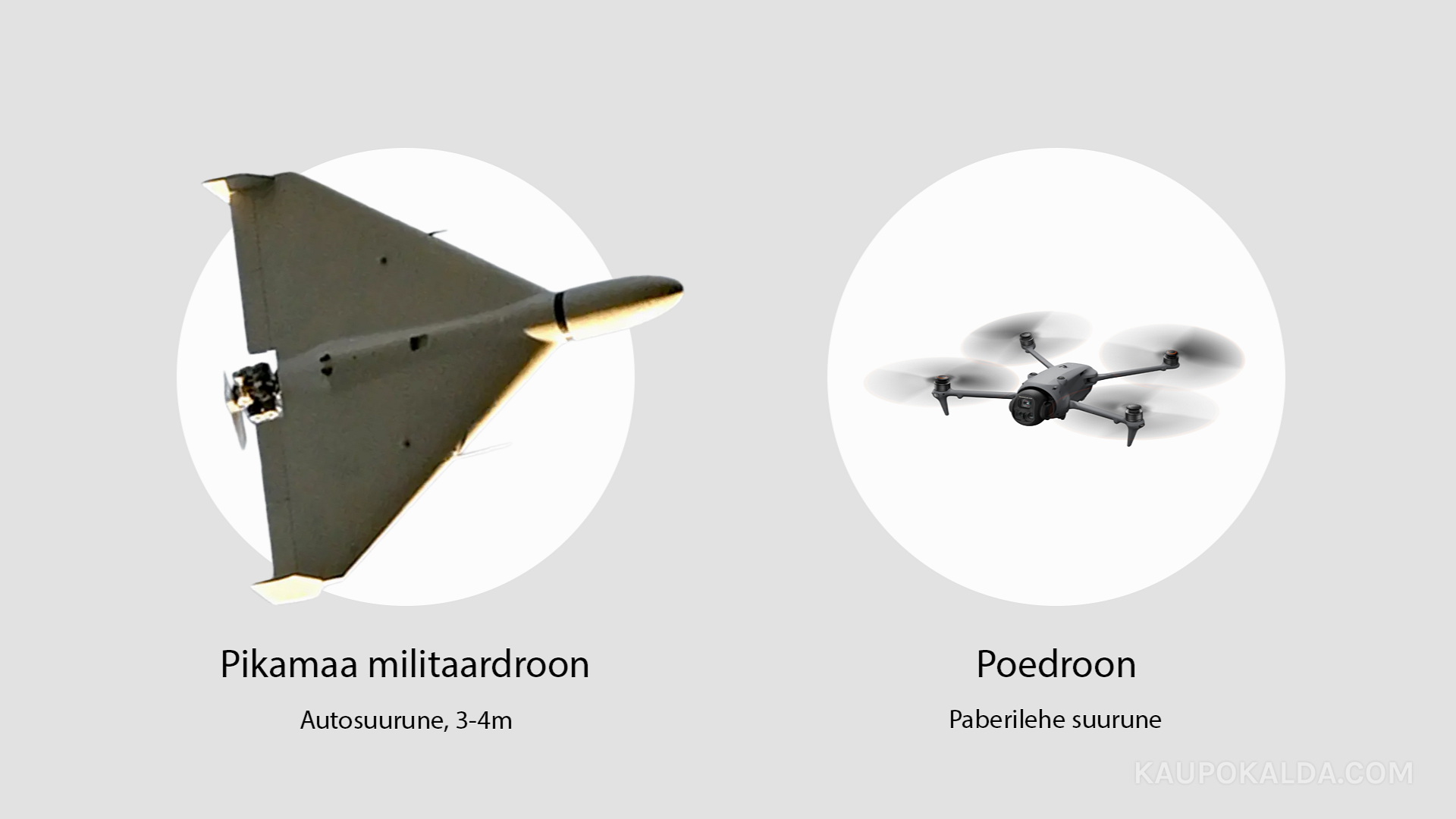
A tank and a car are both vehicles, but very different ones. Likewise, the drone that veered off course and exploded in a field in southern Estonia - roughly like the one on the left in the picture - is different from the off-the-shelf drone I use to take photos, for example. But if you see a military drone like that, it should raise more suspicions and questions.
An ordinary off-the-shelf drone looks like a flying kitten, legs spread out. It is about the size of a sheet of paper, it has 4 legs, 4 propellers and often stops, takes a photo and moves to another position.
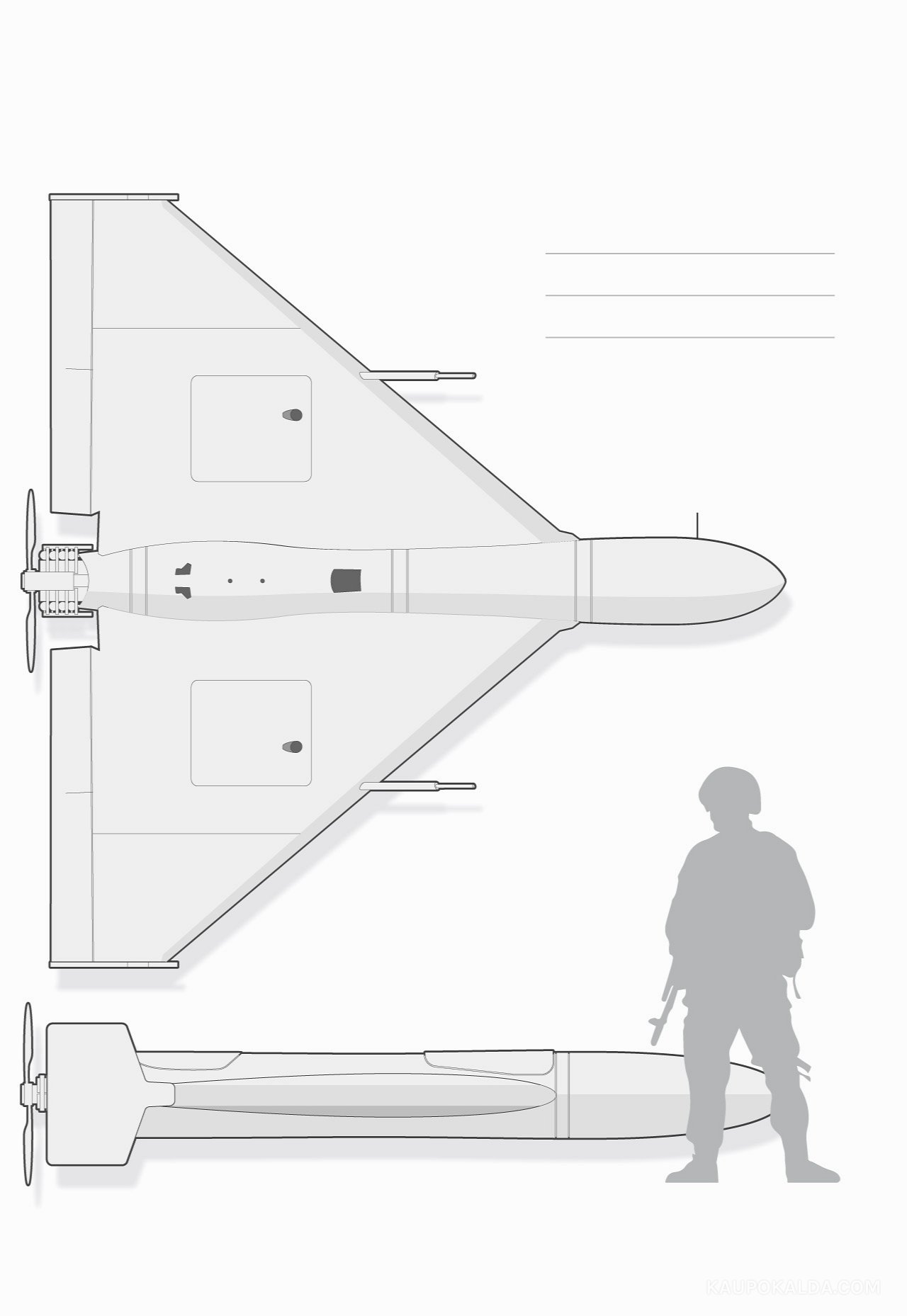
Exploded here war drone is triangular, aircraft-like, many times larger - car-sized, 3-4m long. It makes a lot of noise because it runs on an internal combustion engine.
True, off-the-shelf drones, generally modified, are used quite extensively in war, primarily for reconnaissance - whether they have a good zoom or a thermal camera. However, there is no reason to think that in a peaceful area this means anything other than photographing and filming the beautiful surroundings as a hobby or for work.
In addition, all sorts of small, locally produced combat drones are used in the war, which often carry interference-resistant optical cable, perhaps explosives, etc. From a distance, their 4 arms also make them resemble consumer drones to some extent. Many have probably seen videos of them, and they are depressing, especially those in which Russian warmongers use them to hunt civilians in frontline areas.
So drones themselves range from large aircraft to palm-sized ones.
What should you do if you notice an aircraft that looks like an ordinary store-bought drone and you start to wonder - "What the hell is it doing here?"
- Watch where it lands, and you'll find the pilot that way. They could easily be several hundred metres away. Even in a car.
- Go and ask, but please start by asking what the plan is rather than being hostile straight away. You can ask directly and politely. If the pilot is in a car, wave to get their attention or knock on the window; don't bang on it as if you want to smash it in. That happened to me once (I mostly take pictures from my car), and it nearly gave me a heart attack. People have almost always approached me quite politely but firmly, and I have always explained: if the property developer hasn't notified residents, if that hasn't been possible, or if I'm photographing a nearby property instead, that's the situation and nobody means any harm. Sometimes I've sent the pictures to residents afterwards, and everyone's happy.
- If the drone operator has a clear answer - a commissioned job, for example - then the matter is pretty much settled. Of course, you can ask - who commissioned it? If it still seems suspicious, they might be able to show you an email or something similar; most commissions are electronic. You can't demand to see it, though; you can ask. Personally, I often photograph interesting subjects just for the sake of it, either as a hobby or for a photo bank. Not so much private houses, but manor houses, churches, interesting new commercial buildings, sunsets or distant city views, etc.
- If the answer is still vague or they are flying just for entertainment, you can ask them to fly elsewhere or farther away. A reasonable operator will accommodate that if possible. Once, for example, we disturbed someone in Kassari, Hiiumaa, who was lying on their back admiring the clouds. I hovered above them for quite a while, unaware they were there, photographing the magnificent Sääretirp. I got a proper telling-off, but I apologized and explained anyway. Afterwards they came over and apologized for overreacting. It happens, no harm done. But of course it can be startling.
- There is no right to simply send someone away unless there is a clear infringement of rights. You may also fly over a property, provided it is not at a very low altitude. It is not polite, especially if the photography has not been commissioned, but neither is it prohibited or illegal. We really do try to be considerate as much as possible and get our work done quickly.
- If someone is very close to a window for quite a while, that's more suspicious. Even then, though, it could be a commissioned photo shoot, and the camera probably isn't pointed directly at the window. Once, without knowing it, I flew over an area near someone's property while someone was sunbathing. I didn't see them. If you still have lingering doubts, you can always call the police to help clarify the situation. I've spoken to them several times, and it has always been pleasant and constructive.
In summary
In peacetime, drones are no more dangerous than ordinary cameras or a kitchen knife. Almost all drone pilots are simply capturing beauty. They take pictures and video clips, and that is inherently a very positive thing. So let’s assume that by default, but exercise caution where necessary, and you can always go and ask. A drone is almost always a flying camera for creative work.
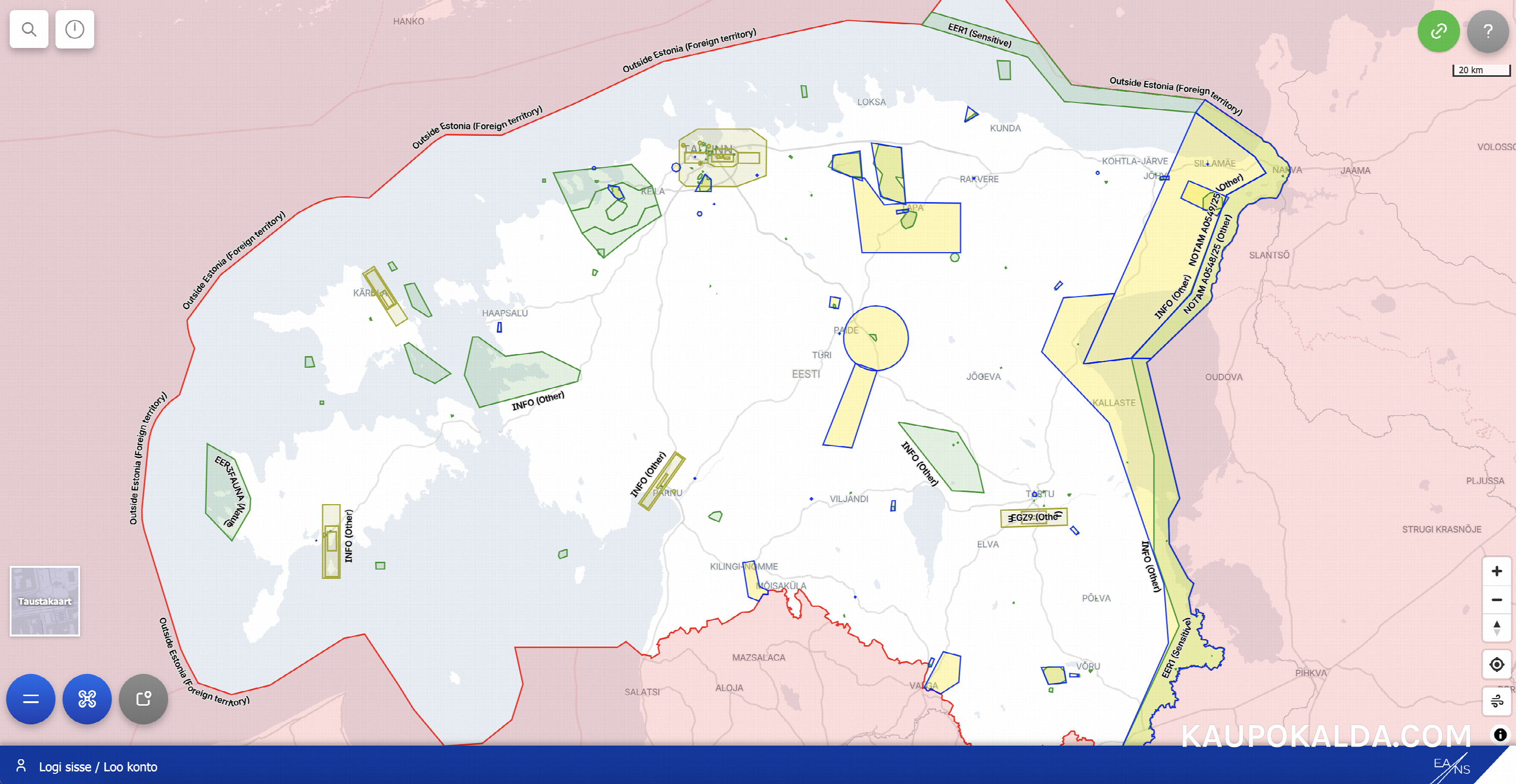
Places where there are restrictions, there are also many. Flying in border areas is currently prohibited altogether. You can see this from the drone map each.
If you get the chance, try it yourself too. If you don't know how to choose - and usually people don't - go droon.ee the shop, which has by far the best know-how and selection in Estonia. You can get something quite decent for a couple, three or four hundred euros. If you get a drone, take your time to read through the Transport Administration's drone website: https://transpordiamet.ee/droonid
Don’t fly in prohibited places (especially near airfields, but also military sites and the like), don’t fly over people, and never exceed the permitted height, which is 120m across the country and less in many places. The information is on the drone map, and there’s an app too.
Fly safely!
