Wind and drones, or how the Drone Hunt was held on Hiiumaa

Summer 2014, Hiiumaa.
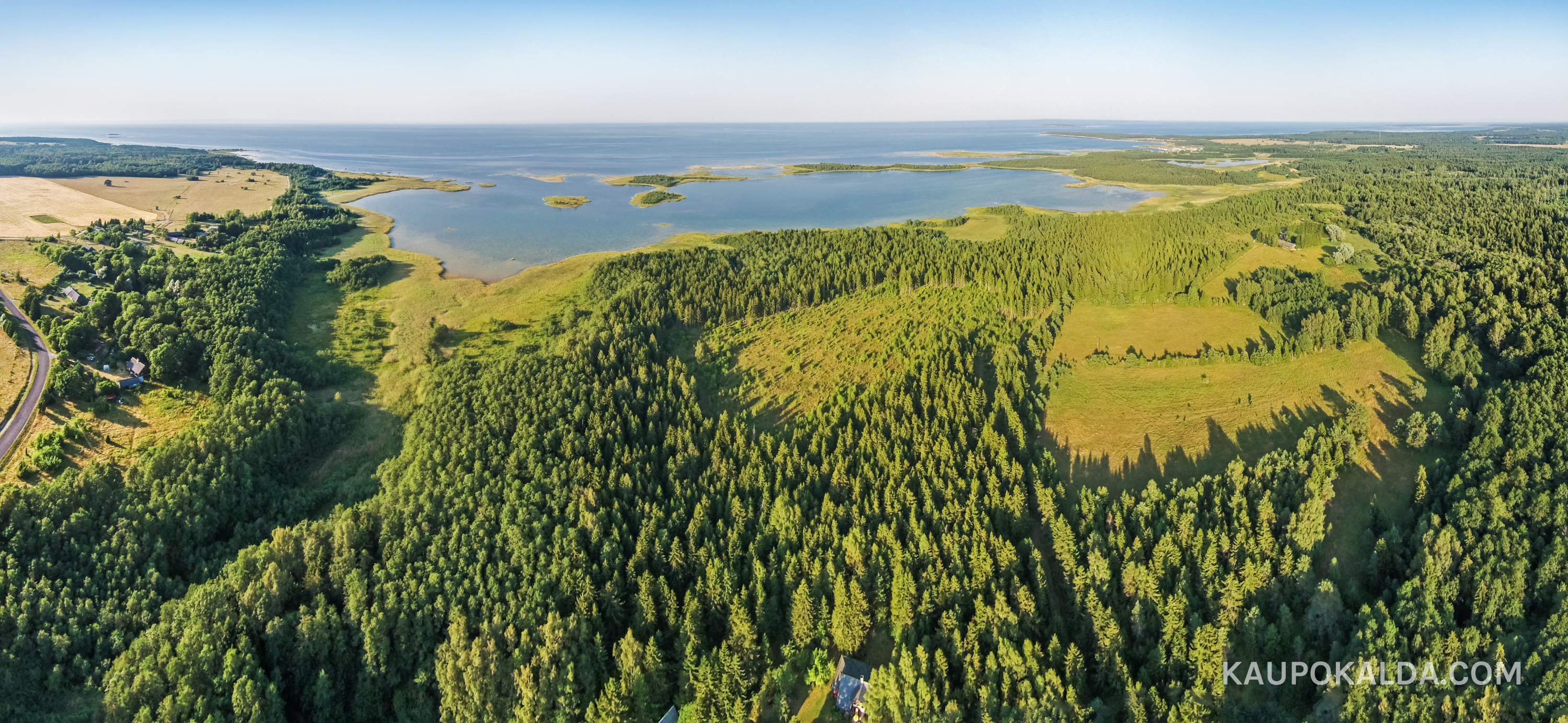
I'm exploring the lands around my friend's childhood home with them, and we decide to take aerial drone photos and videos of the area. Very nostalgic. It's quite windy, but in my recklessness I figure it's no big deal, it'll fly just fine. I make a few lower passes over the village at around 50m, and everything is okay. Then I climb to 150m to make an aerial pass over the entire area. This is the very clip where you can also see the wind buffeting the drone quite badly.
I'm flying over the village really fast with the tailwind, even too fast, like a satellite. Above the tall forest. Suddenly I notice that the battery is at 36% - all right, I'm quite far away, the drone is high up, time to start landing. Normally you start landing at 30%. I pull the stick on the controller towards me, but strangely the distance figures on the screen slowly increase instead, because the strong wind plus the draining battery have robbed it of enough power to move. Oh, disaster! Panic, blood rushes to my head, adrenaline takes the starring role in my bloodstream - so, this is the moment I've been prepared for just in case - I think I'm going to lose the drone. Now it's happening to me, of course. Okay, an idea! I'll come down a little, because the wind is too strong up there, maybe it can struggle back then. I descend to about 100m and the drone disappears behind the trees.
At that moment the signal was lost. In such a situation the drone should return to its takeoff point and land on its own, but it is too far away, the battery is too low, and there is no time. Has it already fallen? Is it landing somewhere? I rush back a little, stumbling in flip-flops, to regain visual contact with the drone over the trees, which should restore the signal. Yes! I briefly get the image back, the battery is at 17%, and the phone also receives the last location. But 15% is the threshold at which it starts landing on its own. Well, good thing it’s not over the sea. Approx. one minute remains until automatic landing.

A little more panic before I realize I should run on through the forest - perhaps I'll see or hear where it lands. I dash through the forest in flip-flops, scratching my legs on branches, and reach a clearing. Silence. Oh, the trees are incredibly tall; if it landed in a treetop somewhere, I simply can't see it. I quickly check my phone - great, the location of the last signal is visible on the map! There's hope. But the drone landed about a minute or two after the signal was lost, so it probably drifted away in the wind. Later that evening we google it - apparently it can't use GPS to hold its position during an automatic landing.

A sad trip home. I call my wife - well, that’s how it is, we’ve lost it. I feel really stupid - flying that high in such wind, idiot! I tell our friends at our accommodation what happened. One of them is a member of the local model aircraft club, who immediately gets in touch with others. We come up with a plan together, and several of us go to comb through the forest.
When we reach the forest, we split up in a large clearing, at the edge of which was the last signal, a dot on the map. We search both the forest and the clearing for several hours. Nothing. Hopeless. The plants are also damn tall, and the drone itself is only 20-30cm. It’s probably up a tree anyway, and you can’t see anything there. Looking up from below, the treetop is just black, opaque. The guys consider flying over with another drone and scanning, but don’t risk it - it’s too windy and the chances of seeing anything in the dense forest are slim. Even though my drone is white. It’s getting dark, so we head back home. The boys don’t want to give up and use the wind direction and all the other known data to calculate a possible drift area. Up to a couple of hundred metres downwind, they suggest. The next day we repeat the hours-long search, but unfortunately nothing. The last ray of hope went out.

When I get home a day or two later, I take my friends' advice on Facebook "Hiiumaa Heaks" to post a call in the group. This group has a great many members, over 4000. I prepared it on my website with the map on the relevant information page to go with the whole story, plus a bounty. At the same time, I sadly agreed with the importer that I would probably go and buy a new drone the next day. It seemed hopeless. 1200€ - whoosh!
2 hours later, a young woman calls and happily announces that the drone has been found. What?! Already?! For a moment I even felt a little disappointed - the hunt was already over - because it had got "half the island" going, acquaintances called, strangers called, someone even called from the sea - when we reach shore by boat, the guys and I will go straight out hunting! The website had over 5000 visitors that day. A huge event! Apparently there were more people in the woods than had ever been seen there before. It turned out that the drone had found a small clearing just 30m from the last point and landed there under a spruce tree. We simply walked past it because we couldn't see it among the plants. Well, nice :)

A couple of days later, the person who found it, who had just gone there on holiday from Tallinn, brought the drone back to Tallinn. The suspense continued, because I didn't know whether it worked. Whether it had fallen, been damaged by the impact or suffered water damage, as it had been pouring. But it turned out to work perfectly. Phew. Thanks to the finders! Thanks to the Hiiumaa model aircraft guys!
From there I started sky panoramas to take photos, because it was around Kukka in Hiiumaa that I took the first panorama and it turned out pretty okay.
What can we learn from this story?
Flying in windy weather is dangerous. While a drone may cope at low altitude, the wind higher up can be 3-4 or even more times stronger. A drone's wind resistance is around 15m/s; that day it was 7m/s at low altitude. So higher up, gusts could have been significantly stronger than the drone's flight speed, even 30m/s.
Secondly, as the battery drains, maximum flight power decreases linearly. I don’t know why I hadn’t realised this earlier. When it unsuccessfully started heading home at 36%, the combination of strong wind and reduced power meant it no longer had the strength to make it back.
It's a good thing I wasn't over the sea, because I often fly over the sea and take pictures of the coast. If I had been over the sea with a tailwind that time, I probably wouldn't have made it back. Maybe I would have, flying lower where there's less wind, since trees wouldn't have blocked the signal, but maybe not. I heard that around those very days, an identical Phantom 2 Vision+ flew out over the sea in Hiiumaa and stayed there.
In addition, I ordered myself a little gadget called Tile. It sends a signal to my phone from 30-50m away, and the battery lasts about a year. The "tablet" is tiny and light, just right for a drone to carry, where every gram counts. If I had had it attached back then, we would have found the drone quickly, because we would have installed the app on all the searchers' phones and they would have searched as a network as we moved through the forest at intervals. Otherwise, you can walk past your aircraft even from 1m away if it's hidden under ferns. Not to mention treetops. There are also devices with GPS and SIM cards, but their batteries don't last long and they are bigger and heavier, making them better suited to larger drones. This tablet is a good compromise.
Fly safely and beware of the wind!
See also the drone hunt information sheet and the article in the Hiiu Elu newspaper.