Investor and photographer Kaupo Kalda: I've gotten quite a few friends to invest (Ärileht interview)
“Wait, where did you put that money?” is a weekly feature on Delfi Ärileht's investment portal, where we get to know local investors a little better.
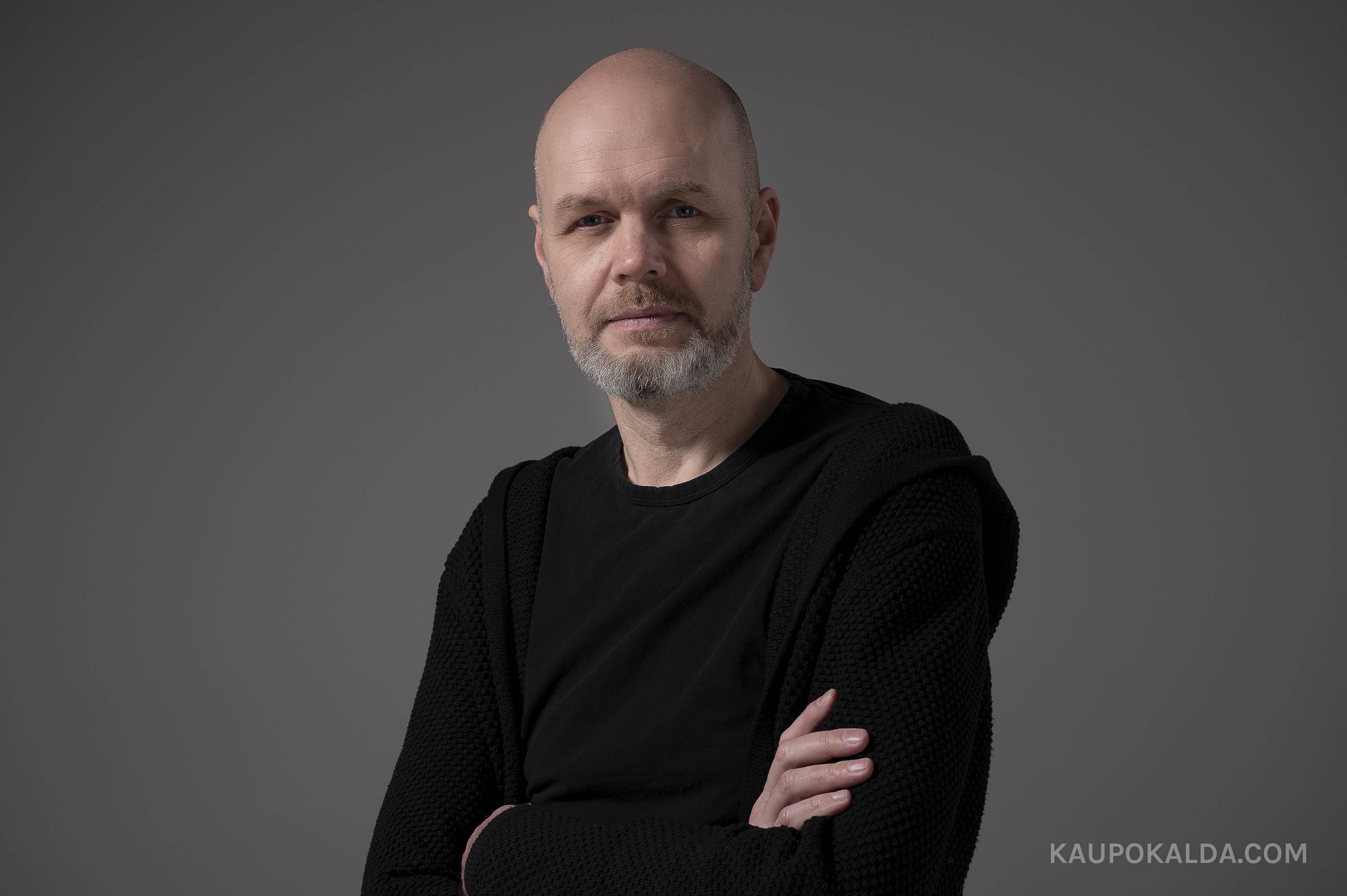
One of Estonia's most acclaimed drone photographers, Kaupo Kalda, is the founder of Drooniklubi, which brings together enthusiasts in his field. Among other things, he writes articles about drones and has taken part in a brainstorming session with the aviation authority on how to make drone operations safer in Estonia. On top of all that, he is an active investor whose largest positions are primarily in technology stocks.
What was your most recent investment? Why did you make it?
Last time it was Google. I'm currently betting on the prospects for AI, but cautiously, since it could be hype or a rather volatile field, as no one yet knows what will actually happen.
We thought AI would take over manual jobs first, but instead it is taking over roles that require thinking, and growing exponentially. Still, I think AI can offer opportunities that have never existed before, and its reach certainly extends across all sectors and borders, not just the technology sector. This gives AI service providers extraordinary opportunities. Another point in Google’s favour is that I use their products all the time myself. ChatGPT worries me a little, but that is why I own several times more Microsoft shares.
If you were short of money at the end of the month, which investment would you sell first?
Fortunately, that’s not very likely; I reached a point in my freelance life long ago where I manage just fine. I also have a substantial emergency fund that would cover my living expenses for at least a year.
But if so, I would look at the current situation. My portfolio is actually very small – as a tech fan, I mainly focus on the technology sector, 70% is in index funds and then there are a few individual stocks, such as Microsoft and Google. I would probably sell some of my index fund holdings, but I would certainly also take a critical look at expenses and potential income. Especially if the situation were to last a long time.
How large a drop in your portfolio would make your knees shake?
I once held a substantial amount in a triple-leveraged index fund. That means it moves three times faster than the market, both up and down. When the first coronavirus-related crisis hit, it seemed as if the world was falling apart. I held on for a few weeks and then, gritting my teeth, sold out in fear, because for a moment it felt as though some historic, apocalyptic stock market crash was coming. The fund had already fallen by at least 30%.
Of course, many people get rich precisely because of such fears. What ifs aside, if I hadn't sold at the time, I would have long since recovered from that drop and be in profit today. I have learned one thing: as a rule, I don't plan to sell, even if there is a stock market crisis, and would only sell when I actually need the money someday. That's why I do the opposite: I try to keep spare cash for tough times on the stock market, so I can buy then.
Have you made any investments you don't want to talk about openly? How was the return?
I don't buy sin stocks – gambling, alcohol, tobacco, fossil fuels, weapons and the like.
Perhaps day trading would be a suitable answer here. When I first started, I thought I'd try it. It seemed exciting and, well, how hard could it be? A friend also explained it, saying, look, it's quite simple. In reality, I didn't understand much. I put in 5000 euros and within a couple of days I was up 3000 euros. It seemed unreal.
But I didn't really understand things precisely, and it's not all that simple - otherwise most people would be successful at it. The next moment I had lost almost everything. It happened quickly, in a couple of days, partly even in a matter of hours. Then I realised it was like gambling, sucking you dry. I stopped immediately and accepted the loss.
What is the most obscure investment in your portfolio?
Not necessarily strange, but those same leveraged funds are “exciting”. I don't hold many of these funds; currently about 10% of my portfolio is in QQQ3, a triple-leveraged index fund. Its return over the past year is 166%. That's fantastically good. Of course, it can just as easily fall, and during a bear market it's a proportionately brutal sight. I bought it in stages over autumn and winter and am currently up about 30%. I consider it a little turbo button for my portfolio.
What would you do with a million euros won in the lottery? How many lottery tickets have you bought?
Oh, I don't believe in the lottery. Think how many people play the lottery and hope to win. Yet a handful of people win each year, and quite a few of them still end up in debt. At the same time, people smoke cigarettes and drink lots of alcohol and don't believe they'll get sick, although smoking puts you at the very highest risk of cancer, and thousands of people are diagnosed with cancer each year, 7000 in Estonia, I think. People's wishful thinking is strange, isn't it.
If a million did fall into my lap, I would invest most of it, because right now I don't really need anything critically important that I couldn't otherwise afford. I realised long ago that beyond a certain amount, money doesn't make anyone happier; it merely eliminates the stress associated with a lack of money and gives you more choice over what to do with your time. It gives you more opportunity to improve your quality of life and sense of happiness. Happiness itself lies elsewhere – in yourself, your family, friends and health – and that's where I focus more of my attention.
I would certainly support my loved ones to some extent, but I'd rather help them use it to set up investment accounts. Some would certainly go to charity as well. That's already a regular part of my life. Only natural.
Since investments are inheritable assets, they would be left to the family. My child – and perhaps even my grandchildren – might not have to take out a home loan. Though hopefully my child won't have to anyway, as I'd like to be able to buy them a home by then, or at least cover part of the cost.
What foolproof long-term investment would you feel confident recommending to anyone?
Nothing is foolproof, but since the Nasdaq 100 has grown fairly steadily over the past 30 years (by more than 12% a year and outpacing inflation several times over), I would venture to recommend an index fund tracking either the Nasdaq 100 or the S&P 500. For example, EQQQ, which I have bought the most myself. Its return over the past five years has been 166% and over 15 years about 750%. Whether that will continue, who knows.
I would definitely recommend the second pension pillar too, also as an index fund. I keep mine with Tuleva and am very happy with the returns and low costs. I would also open a third-pillar pension account, but since I invest through my company, it doesn't make much sense. If I were a salaried employee, I would do that too.
In my eyes, dismantling the second pillar was nothing short of a national crime, because we will most likely end up with several hundred thousand more pensioners living in poverty. Unforgivable. No one will ever be able to live decently on the basic pension, whether here or elsewhere. The second pillar is also needed, ideally with the third pillar as well, plus one's own investments where possible.
Anyone can start investing, even with just 50–100 euros a month. For example, investing a hundred euros at a time in an index fund and hoping for growth similar to historical levels (which is of course not a promise, but a possible expectation based on long-term past returns) – over 12% a year – would amount to about 100,000 over 20 years. But you have to do it regularly. I've set myself the goal of investing at least a thousand euros a month, more if possible, so you can work out for yourselves what I'm aiming for.
Index funds really are the main recommendation. You don’t have to spend time researching or know much at all about companies, business or investing. You simply keep adding money to the fund gradually and build for your future.
What's the craziest investment advice or opportunity you've heard of or come across?
There is a (too large) Financial Freedom group on Facebook where someone under every post bellows that index funds are boring and the like. We have always seen such ‘get-rich-quick’ types, and it is simply annoying noise. Before long, most of them fall silent, and we know why.
I don’t view crypto positively either, because it has no real underlying asset and is purely speculative. It seems that crypto’s big rise happened when it was a novelty, and now people are trying to repeat it, inspired by examples of those who got rich from it. Just as people try to repeat every success story. But the risks are too great there and there isn’t much logic behind it.
Third, I stay away from all kinds of savings and loan associations. If an association advertises exceptionally high returns on TV, you already know they will probably soon be wanted, arrested and in the headlines. I'm not saying all associations are scams like this, but there are certainly too many of them.
What do you gladly spend money on, knowing that it isn't the wisest financial decision (guilty pleasure)?
I don't even know if all of these qualify as guilty pleasures, but I have nothing else to offer.
I have been spending money on renovating and furnishing my home for several years now, as I have lived in this house for over 20 years. It is a bottomless pit for spending money. I also want to bring the house more or less up to passive house standards, replace the windows, install a solar roof and so on. All of this is a long and expensive process, but I enjoy it immensely.
I'm always happy to spend money on good local food at our restaurants. I greatly appreciate Estonian cuisine and its chefs, and local ingredients. When I'm abroad, that's the first thing I start to miss, after my cats, of course.
Sometimes I also go to the theatre in London or a concert in Stockholm, for example; this summer I'm going to a Coldplay concert in Helsinki. Amazing experiences. Although my favourite travel destination is actually Estonia, especially the islands.
One more thing – I simply give away most of my used things. I don't try to sell them – cameras, drones, TVs, phones, furniture and so on. I sell some things too, but I've even given away a car. I get more out of it than I would in money – a powerful, memorable emotion that sometimes brings me to tears.
Which moment on your investment journey gave you the greatest feeling of euphoria?
Lately I’ve been happy to have got quite a few friends and acquaintances to invest, both for themselves and for their children. I’ve actually helped them and explained how to get started, and written a simple guide on my own blog too. This has made them realise that they don’t have to work until they die, that they don’t have to live in poverty in retirement. Or that inflation won’t eat away at idle cash.
The main recommendation has always been index funds and investing regularly. Every month, even if it’s just a hundred euros at a time. That way you can build several additional pension pillars and, in the best case, achieve financial freedom long before retirement age.
Adobe or Apple?
Both, but preferably as part of an index fund. In the EQQQ index fund, Apple accounts for 7.4% and Adobe for 1.9%.
I don’t know where either of them stands on their AI journey. Adobe has the Firefly AI tool, but it’s still a bit rough around the edges. Still, I can see that they’re investing heavily in it and will probably achieve more in this area.
I really don’t understand Apple at the moment. Compared with OpenAI and other innovative solutions, Siri is yesterday’s news. It’s like a slightly dim-witted doll that says four sentences and doesn’t understand much – to exaggerate a little. At the same time, I hear they’re buying up AI companies and are sure to have surprises in store. Since Apple’s stock is already expensive, I can’t really be overly optimistic either. What are their other plans beyond phones, computers and services – I don’t know. The virtual reality headset I saw recently is cool, but it’s certainly not a mainstream product yet.
Finally – start investing today. Use your income tax refund as seed money, for example. Anyone can invest, even in increments of 50 euros. Believe me, one day you'll be very grateful to yourself. If you don't know how, find the simple guide on my blog; there's nothing beyond your reach. Or increase your contributions to your second/third pension pillar.
The article was originally published in Delfi Ärileht (behind a paywall)
----
Edit: By the end of 2024, the portfolio has grown by over 30% since the beginning of the year and crossed the quarter-million mark a few months ago. Index funds have continued their somewhat astonishing rise. That does make me a little concerned, but at the same time I’m holding 20% in cash and waiting to put it to use if the market enters a correction. If Trump messes up the US economy, that will happen, and it will be serious. I need to think about whether to move partly into a broader-based ETF, since I’m currently almost entirely in US technology (EQQQ index, Google, Microsoft, Nvidia), or increase the proportion of cash, because in the event of a crash it will probably drag all markets down to a greater or lesser extent. A third option is to simply forget all about it, drink some juice and let the whole thing tick along untouched for 10-15 years. Life tends to show that if you don’t tinker, the return is ultimately the best. 🤔
----
PS. See also this simple, plain-language a step-by-step guide to getting started with investing in index funds.