Radio interview and quick guide - how an ordinary person can invest and earn several additional pensions
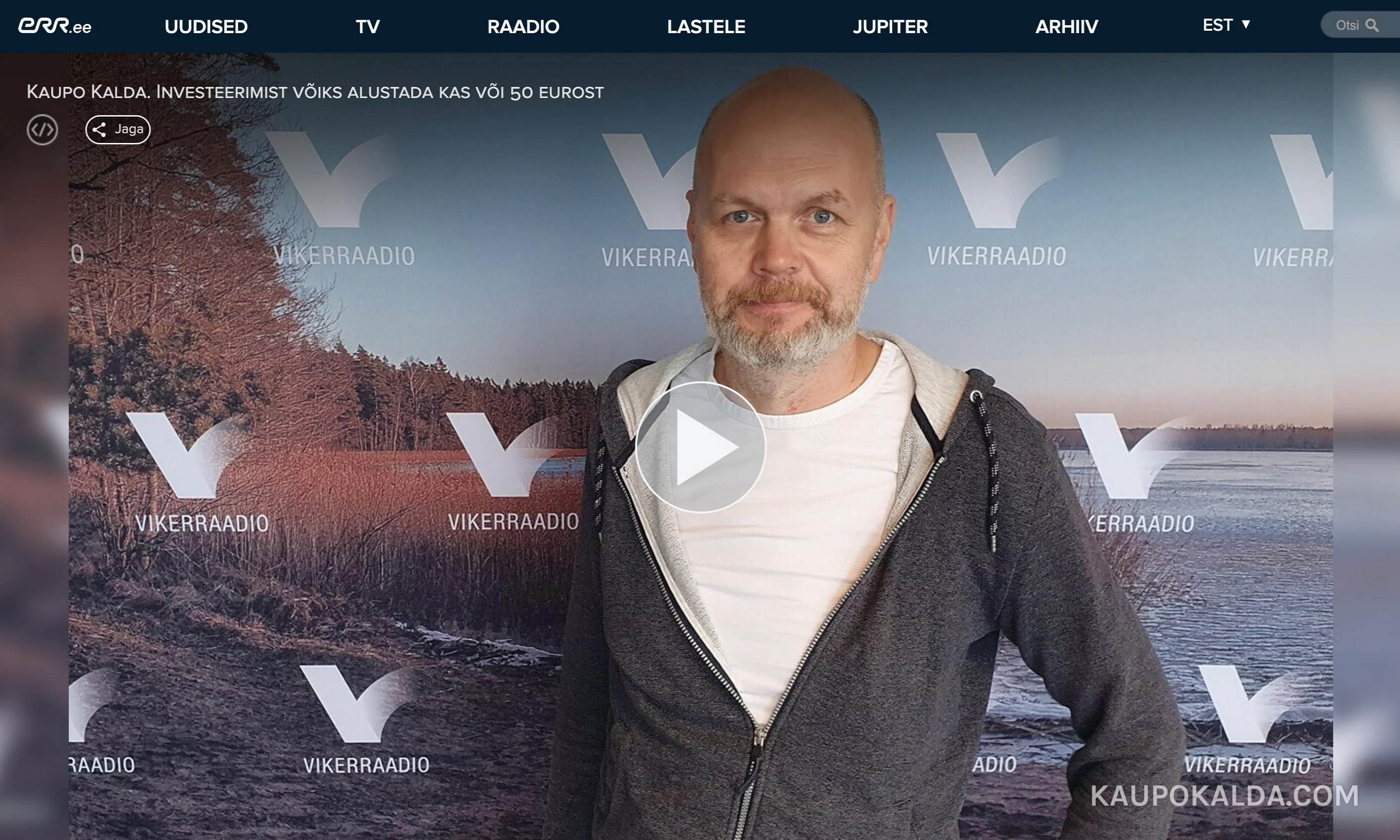
Interview on Vikerraadio
Listen to the programme here.
I was invited to Vikerraadio's morning programme to talk about why and how a completely ordinary person can invest, even in increments of €50, and build up a second pension or several with little effort. My own plan is to invest regularly and "earn at least 5-10 additional pensions". So far, it looks like it will work out.
Everyone should invest, because a pension is only a basic level of income
I agreed to go precisely because we all need to understand - retirement age eventually arrives, the average person spends over 20 years in retirement, and we cannot rely solely on the pension, it's too little. I'm an ordinary person, a man and a dog in a one-man company, a designer and photographer. I'm approaching 50 without even noticing, and believe me - time flies. The sooner you start investing, the longer compound interest has to work. €100 invested today could easily be €1000 in 15 years.
Investing isn't just for rich businesspeople; it's essential for every ordinary person. No country's pension system covers more than a basic standard of living. We need to understand that if you can't even put aside 50€ today, in the future you'll have to reckon with a pension about 3x smaller than your income. Are you ready for that? Let's say you earn 1500€ a month today. Would you be ready for a monthly income of 500€? Exactly.
Index funds
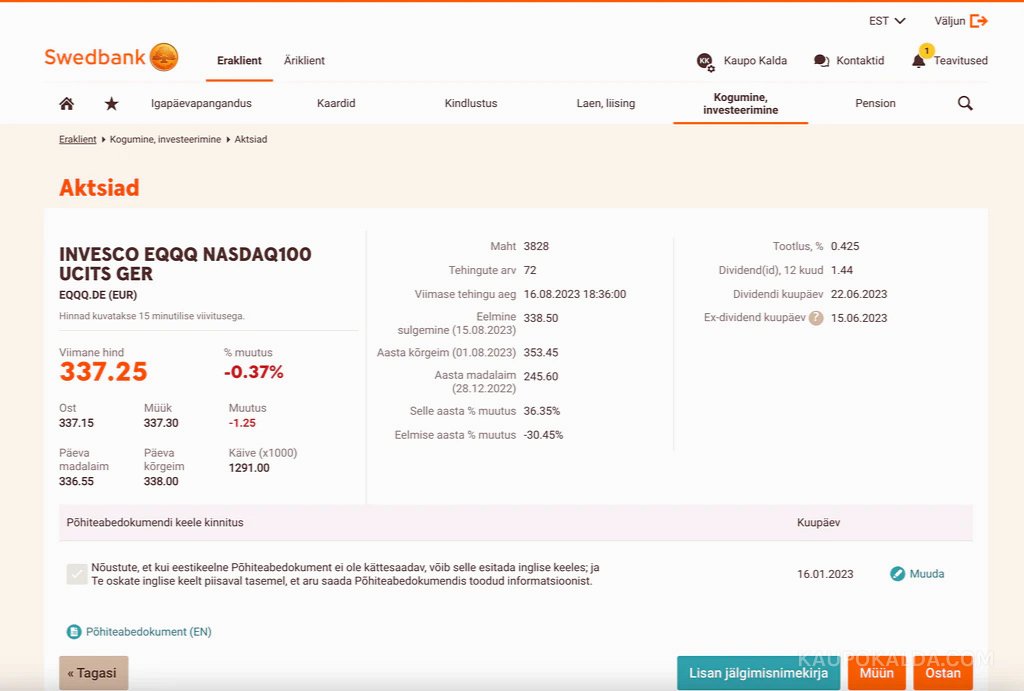
In the programme, I talk about how I use index funds as a retail investor. An index fund is a fund that tracks, for example, stocks in a particular sector and rises and falls accordingly. The advantage is that you spread the risk across, say, 100 companies. The Nasdaq 100 index fund (ETF) I talk about in the programme is EQQQ, but there are others. At Swedbank, at least, you could buy it on the German stock exchange, in euros. Its long-term return has been an excellent 15-20%, which may not continue after several decades, but time will tell. Generally, an ETF is one of the simplest ways to invest, spreading the risk across 100 large US companies. Buying one is about as easy as making a bank transfer.
If you want to get started, here's a short guide
- Really - it’s not difficult. I’m completely clueless about numbers and I manage. After the first purchase, it’s a piece of cake from then on.
- Go to the bank, open an investment account (for example, for a child as well). At least I had to go to the bank in person to do it.
- Transfer money to that account as a starting amount and/or set up a standing order for €50, €100 or €1,000 a month; you know what you can afford.
- For example, buy this EQQQ index fund (at the time of writing, around €340 each; I bought EQQQ.de through Swedbank, the German exchange version), which spreads the risk across 100 strong, large US publicly traded tech companies. EQQQ also pays a dividend, currently 0.45%. It could also be another index fund, tracking either the Nasdaq 100 or, for example, the S&P 500 index. A similar one is, for example EXXT, which can also be bought in euros. ETF management fees are very low.
- The purchasing process is no more complicated than ordering shoes from Amazon. Swedbank also has instructional video. The first time may feel a little unsettling, but after that it's super easy. An index fund is purchased in the same way as shares - you specify how many units you want to buy (the corresponding amount must be available as cash in your investment account). If possible, try to buy more than €500 at a time (save up for a few months, for example), so that the minimum transaction fee of €9.90 doesn't immediately eat up too much.
- Buy more of it gradually, never sell, unless you absolutely have to. Don't sell when the market is red. Fluctuations are natural; the biggest mistakes are made by selling out of fear when markets fall. That's when professionals make fortunes. Don't sell then, buy more! How far it will fall is always clear in hindsight.
- Review your expenses, is there anything you could forgo and transfer that amount to an investment account instead? My child puts most of their birthday money and garage sale proceeds into it, and I add €100 each month. In about 10 years, as an adult, they will definitely have a down payment for a home. With room to spare, too.
- NB! Don’t forget the money paid into the investment account to declare. This is usually done through the bank with a couple of simple clicks when it’s time to file your tax return. You need to do this so that you don’t pay too much income tax in the future. If you declare it, you only pay 20% income tax when you withdraw more money from the account than you have deposited.
- in the second pension pillar I am too, with Tuleva, earning over 9% in the long term, which is certainly above long-term inflation, averaging 2-3%. I'm very happy. By the way, the second pillar, third pillar and all other investments can be inherited.
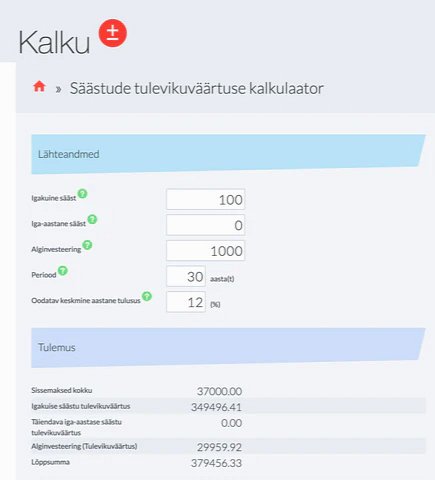
- Want to test your investment plan in the investment calculator. Enter an initial contribution, how much you could add each month, how many years until retirement, and, for example, 12 or 15% as the rate of return. The EQQQ discussed here has had a long-term return of over 15%, although it may not continue so rosily in a changing world. Our long-term inflation rate is around 3%.
You can find EQQQ and other index funds at Swedbank under Investing > ETFs under. Index funds that track the Nasdaq 100 are probably available at every bank, perhaps under a different name.
If necessary, ask your bank. LHV, for example, also has investment account, which should be even easier to use and automates the entire process.
Also recently published in Delfi in the article broad-based ETFs or index funds are mainly recommended, for example EXXT (which also tracks the Nasdaq 100 index and can be purchased in euros).