Frankly about the numbers. How much aerial photography costs and what makes up the price.

People sometimes say this service is a little expensive: photography isn't that difficult, is it, and what costs can there really be when you just take a few shots? I've also seen people offering absurdly low prices without realizing what that means. Let's take a realistic and transparent look at it. Let me say upfront that, thanks to Estonia's weather, we have significantly fewer than 100 days a year that are genuinely suitable for quality photography (and bookings are only made during the green season anyway). Compared to a so-called regular office job, that's about 3 times fewer.
See is certainly not meant as a lament about how hard an aerial photographer's life is, but to show that you can't get rich quick doing this in Estonia and that there are logical reasons for the price. Someone has to talk about it and stand up for the field.
Suppose you are a skilled aerial photographer and earn a living for your family doing it. That means your net income on payday should be at least 1500€ a month, plus of course income and social taxes (the total salary cost, if you work alone, is about 2550€ including taxes). On top of that are a number of other expenses, obstacles and risks you need to consider, and these make up the price of the service.
I did some research. Price level in the (professional, but also variable in quality) market, it fluctuates somewhere Between €150-350 per property and I am somewhere in the middle, depending on the complexity of the project. The day rate for drone crews with extremely expensive video equipment (usually at least 2 men) can be as much as €3000 + running costs.
A large part of pricing certainly depends on the result, the quality, but also on the ability to sell and stand up for yourself. Of course, there are also hobbyists who take pictures essentially for free because they simply have a flying camera on the shelf, but again - if quality matters, it takes skills and good equipment, as with any kind of photography or creative work. The same parallels could be drawn with restaurants, medical services, etc. Owning a knife doesn't make you a brain surgeon.

1. Time actually available
There are about 6 months a year when this service is actually ordered - roughly from April to October, the green season. At other times, the volume of work is marginal. In a calendar month there may be 10-15 days (fewer than 100 days over the whole year), when conditions are suitable in Estonia's climate:
- little wind, you generally don’t go out in winds over 7m/s, dangerous for the drone
- good light, usually warm sunshine or at least some sunshine
- green season (in early spring, late autumn and winter there is very little work)
- those days also include weekends, when you want to be with the rest of your family, but often have to sacrifice those days too
- in one day, there is generally time to photograph about 2, max 3 sites
- some locations require multiple visits for various reasons
So if the time were fully sold, one would reach per month do somewhere 20-25 sites. The rest of the time is spent on other related activities, especially post-processing images. But probably no one in Estonia is completely booked out, especially now that service providers are springing up like mushrooms after rain ("I bought a knife, I'm going to start operating on tonsils"). So maximum possible with this service, it is theoretically €5000 monthly turnover and that for only 6 months a year, a total of max €30k a year. In reality, turnover is generally considerably lower.
2. Actual time spent on the project
Components of the time spent:
- the photography itself
- communicating with the client before and after
- analysing the brief, location, subject, light, times and safety
- obtaining the necessary flight permits
- equipment checks, charging, etc.
- logistics, more distant locations take up a whole day
- post-processing, which often takes as much time as everything preceding it combined
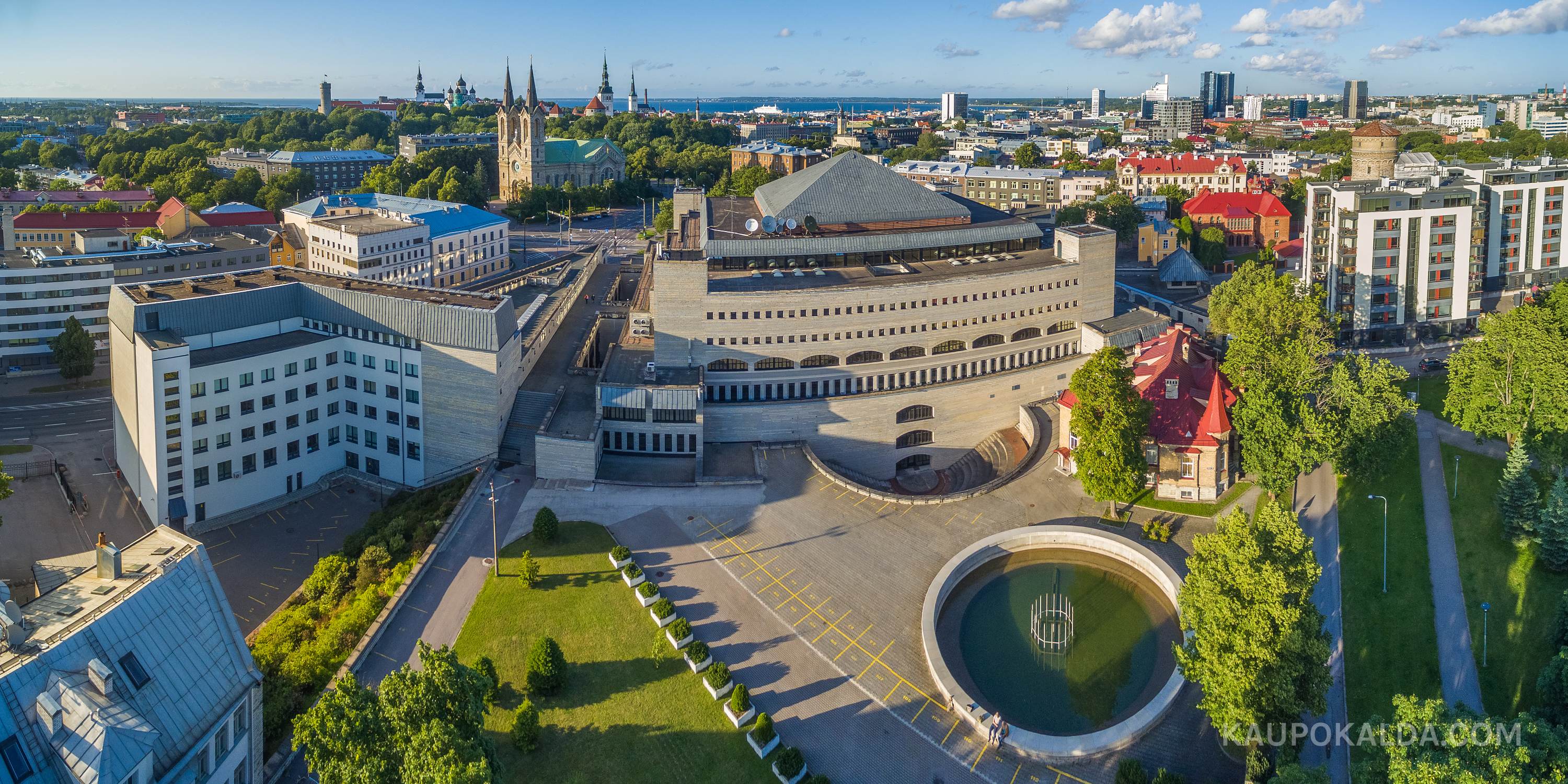
The equipment is different, of course. A budget service provider's aircraft with less capable photography equipment costs around €1200-1500, while my flying setup in the air at any one time costs €5000. The really serious operators may have €50+k hanging in the sky, with world-class video cameras. Then there are the batteries - one costing €220 gives 10-12 minutes of shooting time, so you need a bagful of them, and they have a limited lifespan. Chargers, extra lenses, camera bags and the like are additional.
Therefore drone equipment costs around €7000+. Also a proper computer, in the region of €2000-3000. And a quick big smartphone 600-1000€, for both communication and maintaining visual contact with the drone.
Equipment tends to be expensive for photographers at all levels, because it has to be good. At least €10,000 in total, and we spread this cost over a maximum of 3 years, after which equipment generally needs to be replaced. That makes €3,000 a year.

4. High risk!
Besides the weather, a major difference between an aerial photographer and a conventional photographer is the risk of your aircraft crashing to pieces. That means the risk on every flight is -€5000. Unfortunately, the probability of that risk is quite high; no pilot, mechanical or software error is forgiven. For example, my particular drone model went on sale sometime at the beginning of the year, and by early spring I knew of at least 5 cases where one had crashed.
Knowing a little about Estonian sales figures, this could mean about 5-10% of all units sold. In a couple of months. Compare that with cars, for example. The more serious operators, especially in aerial video, have duplicate equipment so that work doesn't come to a halt. With minor qualifications, I do too. Unfortunately, insurers in Estonia don't insure drones.
5. Other expenses
- car lease, insurance, repairs + petrol min €500 per month. This work involves a lot of travel and the equipment has to be carried along.
- sales activities, blogging, writing articles, communication, labor is a major expense
- advertising, banner ads 100-300€ per month
- new photo editing software
- accounting
- office or home office
- fast internet connection, phone and other smaller expenses
In summary: revenue is still below expenses
So let's assume that over 12 months (there is essentially no work for 6 months, and on half of the remaining days the weather is unsuitable), a one-person business can generate a maximum of €30,000 in aerial photography service revenue. In reality, it is almost certainly usually less. Let's be very optimistic and stick with that 30k. Annual salary costs are about €30,000. Other costs are about €15,000. Plus the extremely high level of risk mentioned. Costs are roughly €45-50,000 per year, assuming you are the only person on the payroll. So we're already well in the red.
To manage nevertheless, the options are roughly as follows:
- raise the price
- to find ways to earn extra income, for example by making the most of time when there is no actual work to create so-called stock photo files. Still, this is not a very large part of my income.
- provide paid training
- publish books and printed materials
- also offer so-called conventional photography services: architecture, interiors, products, even events
- a somewhat different subject, but to add an aerial video service
- cheat the state out of taxes or engage in so-called OÜ'tamine
- or struggle to get by (Estonians certainly know how to do that, but don't want to) and use the cheapest equipment too
So it can be said that it is hard to make a living in Estonia from aerial photography alone. Most aerial photographers do this work alongside other photography or another job. I couldn't make a living from it either, but luckily I also have another job, which I also do with passion and which is my main job year-round. Photography, on the other hand, is a hobby and a source of extra income, although it sometimes stretches my so-called working days to 16 hours.
The next time you ask for a discount (which fortunately doesn’t happen often) or say "we’d like to use your picture for free, but we’ll credit you", think about whether you would ask the same of a lawyer, a dentist or an ordinary grocery store? It’s hard to spread that credit on a sandwich or put it on a child’s back.
Charity is a separate matter, something we all do from time to time, but our work itself is not expensive and the price is entirely justified, if not cheap. I truly love this work, which is also a hobby for me, and I will continue as long as there are people interested.
Please appreciate it, thank you and here's to great pictures, good people!
PS. To finish, here is a video of a man going into different businesses and asking for a free service or a sample of a service, and what happened next. The logical thing happened.